
When was the last time you looked at your website from a customer’s point of view?
You know exactly where to find your services, how to get in touch, and what your company does best. But someone visiting for the first time doesn’t. They’re scanning, clicking around, and looking for answers. They’re asking,
- “Do they offer what I need?”
- “Do they serve my area?”
- “Can I trust them?”
- “Are they taking new customers?”
If those answers aren’t easy to find, it doesn’t necessarily mean you need a new website. Sometimes, a few smart updates to the content you already have can make a noticeable difference for your potential customers while helping AI tools better understand your business.
A good place to start is your home page and main service pages. Let’s take another look at them through a visitor's eyes.
Start With the Pages that Matter Most
You don’t need to review every page to make your website work harder. Start with a few basics that can have a big impact on how easily people find what they need and decide to take the next step.
- Make it clear what you actually do. Make sure your main services are easy to find and explain them in a way that is easy to understand.
- Answer the questions you hear all the time. Think about the most common questions that come up on phone calls, during sales conversations, or in emails. Answer them on your site.
- Keep information current. Review services, locations, hours, team information, and contact details regularly. Things change, so make sure the basic information people rely on is accurate.
- Give people a reason to trust you. Include reviews, certifications, years of experience, or project examples that support what you say.
- Give visitors a clear next step. Make it easy to call, request a quote, or contact your team.
When we review a website, we’re not always looking to make big changes. Sometimes it’s something simple, like a Contact Us button that’s hard to find or important information buried on the page. In many cases, the right information is already there. It just needs to be easier for customers to find and use. — Arielle Taylor, Lead Designer at inConcert Web Solutions
Are You Answering the Questions People Actually Ask?
Think about the last few questions a customer asked you. Maybe it was:
- “What does this service include?”
- “How long will this take?”
- “Do you serve my area?”
- “How do I know which option is right for me?”
This is where Answer Engine Optimization, or AEO, comes in. People aren’t just typing keywords into search engines anymore. They are asking complete questions and expecting a useful answer.
Start with the questions your customers are already asking. Look at emails, phone calls, contact forms, and conversations with your team. If the same question keeps coming up, there’s a good chance the answer belongs somewhere on your website.
Don’t awkwardly stuff questions into every page, or change the way you write. Focus on giving people helpful, straightforward answers. You’ll make your website more useful and help AI tools better understand what you do.
Make Your Website Content Specific to Your Business
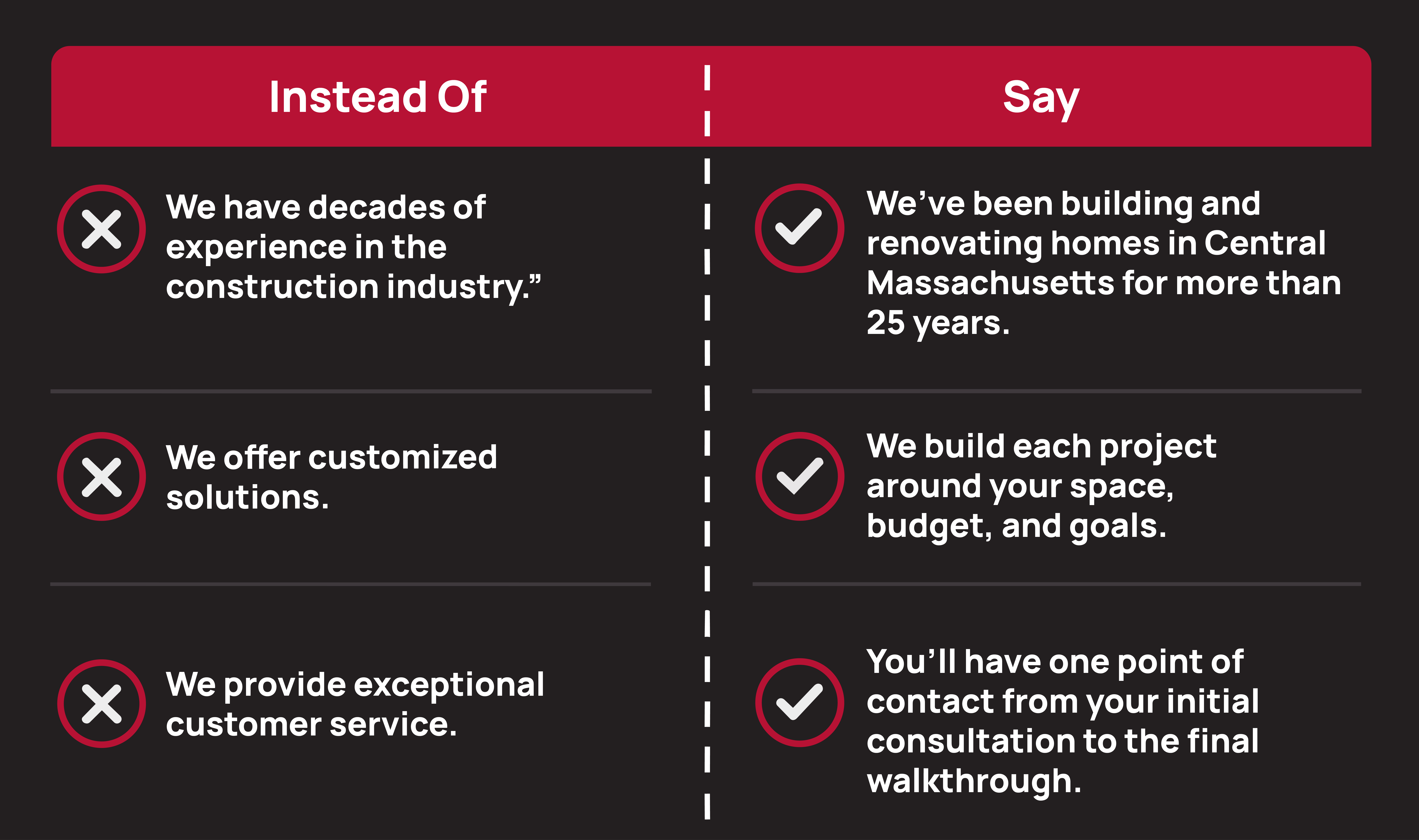
Take a look at some of the statements on your website.
- “We provide exceptional service.”
- “We are committed to our customers.”
- “We offer customized solutions.”
The problem isn’t that these statements are wrong. It’s that almost any business could say them.
Instead of generic messaging, explain what makes your company useful to the customer. Think about:
- What do you specialize in?
- Who do you typically work with?
- What areas do you serve?
- How does your process work?
- How many years have you been in business?
- How many customers have you served, or projects have you completed?
To stand out today, businesses need to be specific. The details are what make your business different, and they also help customers, search engines and AI tools understand why someone should choose you over the competition.
For example:
Don’t Make People Search for the Contact Button
You’ve answered their questions. They’re interested. Now what?
Every important page should make the next step clear. Depending on your business, that might be:
- Request a Quote
- Schedule a Consultation
- Call Us
- Contact Our Team
- Book an Appointment
Don’t save that invitation for the very bottom of the page. Allow visitors to contact you when it naturally makes sense within the content.
Take a look at your online forms, too. Do they work well on a phone? Are you asking for more information than you actually need? Would you want to fill it out yourself?
The easier you make it for someone to take the next step, the less likely you are to lose an interested prospect.
Your Website Is Never Really Finished
Your business probably looks a little different today than it did a year ago. Your website should, too.
Services are added. Teams grow. Service areas change. Customers start asking different questions. Even if your website was up to date when it launched, that doesn’t mean every page still reflects the business today.
You don’t have to tackle everything at once. Start with a few pages and make them more useful. Update an outdated service. Add a question your team answers every week. Replace a generic claim with a specific one. Make your contact button easier to find.
Those small changes add up. They make your website easier for people to use and give search engines and AI tools clearer information about your business.
Not sure where to start? Contact inConcert Web Solutions for help identifying practical website and content updates that can help more people find, understand, and contact your business.